
On This DayOct. 2, 1835 · Gonzales, Texas
Mexico wanted its little cannon back. The settlers of Gonzales stalled, called in help, painted a dare on a homemade flag and fired. It was barely a skirmish, but it started the Texas Revolution.
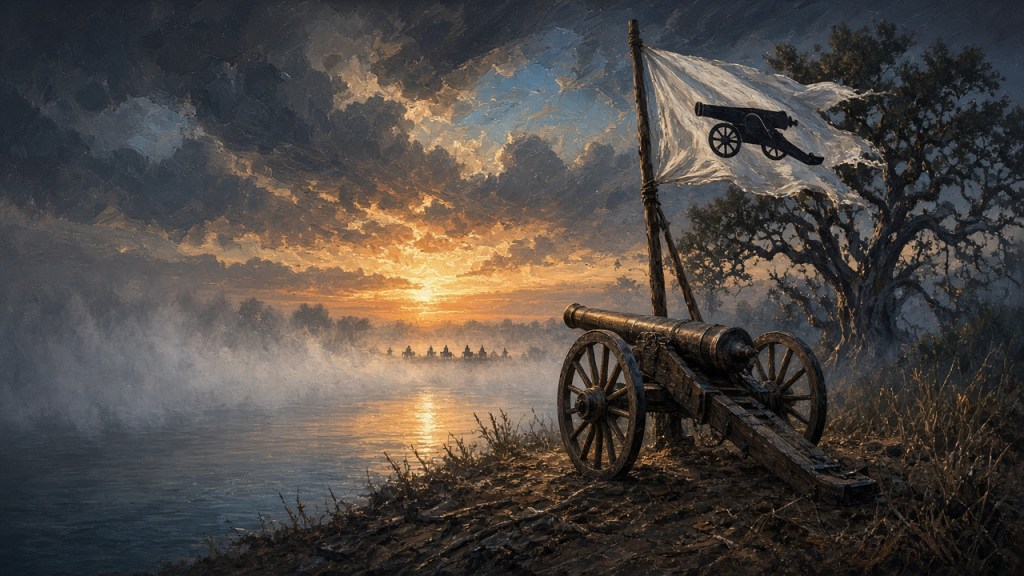
Top image: Illustration: AI-generated (Grok) for We The People Press
It started with a loan. In 1831, Mexican authorities gave the colonists of Gonzales, in Green DeWitt’s colony, a small bronze six-pounder to fend off Comanche raids, on the condition that they hand it back when asked. Four years later, they were asked.
Quick facts
Date
Friday, Oct. 2, 1835, at dawn
Place
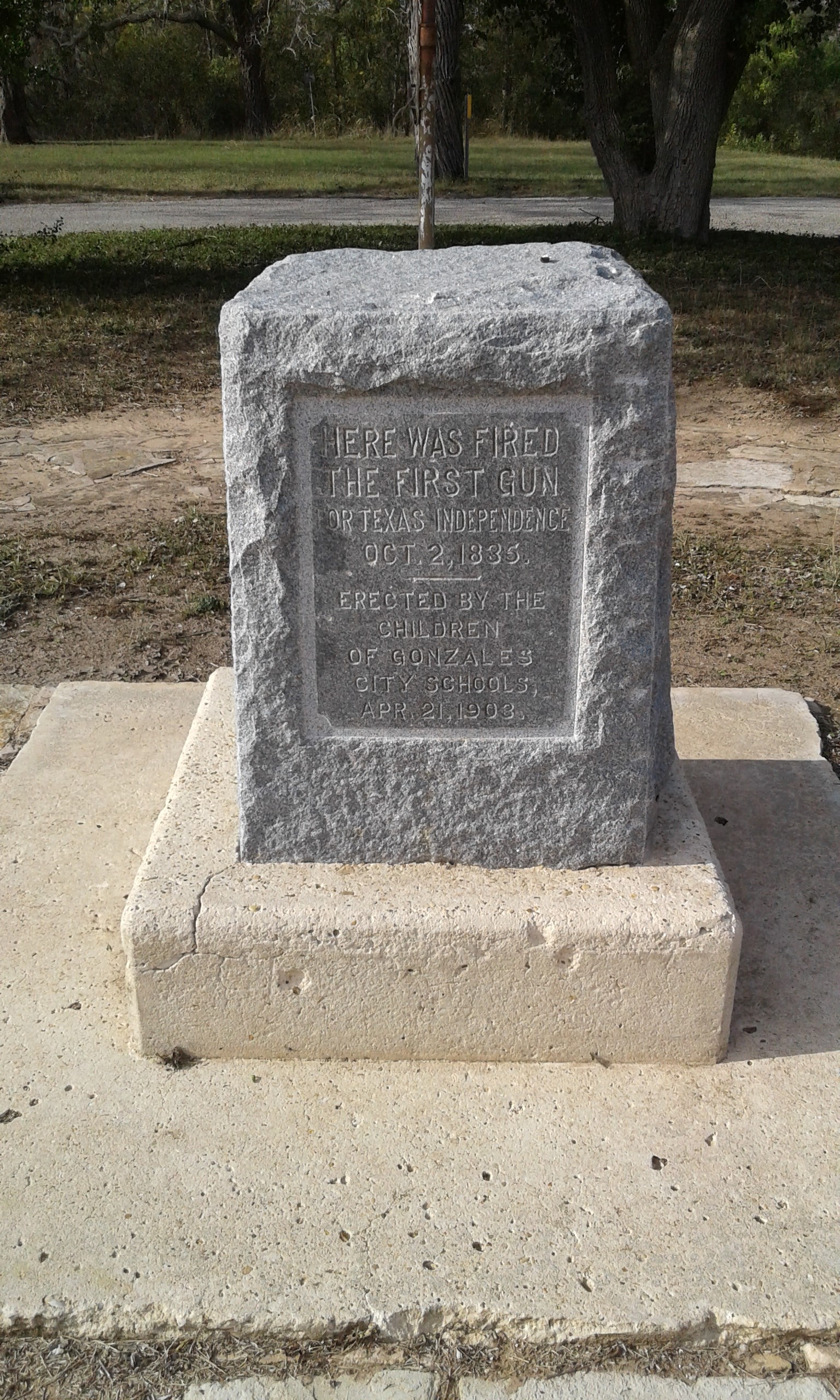
Ezekiel Williams’ farm on the Guadalupe River, about 7 miles upriver from Gonzales, Texas (then part of Mexico)
Texian side
Volunteer militia under Col. John Henry Moore; the cannon handled by James C. Neill. Sources put them at about 140 to 180 men
Mexican side
About 100 dragoons under Lt. Francisco de Castañeda, sent by Col. Domingo de Ugartechea from San Antonio de Béxar
Casualties
One or two Mexican soldiers killed (sources differ). One Texian hurt: a bloody nose from a fall off his horse
Outcome
Castañeda pulled back to Béxar without the cannon. The fight is counted as the first battle of the Texas Revolution
A borrowed cannon becomes a line in the sand
By 1835, Texas colonists and the government of Antonio López de Santa Anna were pulling hard in opposite directions. Santa Anna was centralizing power, and many settlers wanted the federalist Mexican Constitution of 1824 restored. In that mood, a Mexican soldier beat a Gonzales resident on Sept. 10, and the local military commander, Col. Domingo de Ugartechea, decided the cannon should come back to San Antonio de Béxar.
He sent a corporal and five soldiers. At a town meeting, only three citizens voted to give the cannon up. The rest, including alcalde Andrew Ponton, voted to keep it, and Ponton sent a rider to the nearest town asking for help.
Eighteen men at the river
Ugartechea then sent Lt. Francisco de Castañeda with about 100 dragoons. His orders were to get the cannon back but to avoid force if he could. When they reached the Guadalupe River on Sept. 29, the settlers had pulled the ferry and boats off the flood-swollen river, and 18 militiamen, remembered today as the “Old Eighteen,” waited on the far bank. Their captain, Albert Martin, told Castañeda that the alcalde was out of town and the soldiers would have to wait. While they waited, volunteers rode in from nearby settlements.
Once enough men had arrived, they elected John Henry Moore as their commander. Castañeda moved his camp about seven miles upriver, and on Oct. 1 a council of war voted to fight. That night the Texians crossed the river and headed for his camp, bringing the cannon with them.
Fog, a barking dog and a homemade flag
The night attack did not go to plan. Fog rolled in after midnight. Around 3 a.m. a dog barked and gave them away. The Mexican soldiers opened fire, and a spooked horse threw its rider. His bloody nose was the only Texian injury of the entire battle. Some of the men passed the time eating watermelon from a nearby field.
At first light, around 6 a.m., the shooting started. Moore and Castañeda then met between the lines to talk. Moore said the Texians were fighting for the Constitution of 1824. Castañeda replied that he personally sympathized with the federalists, but he had orders to follow.
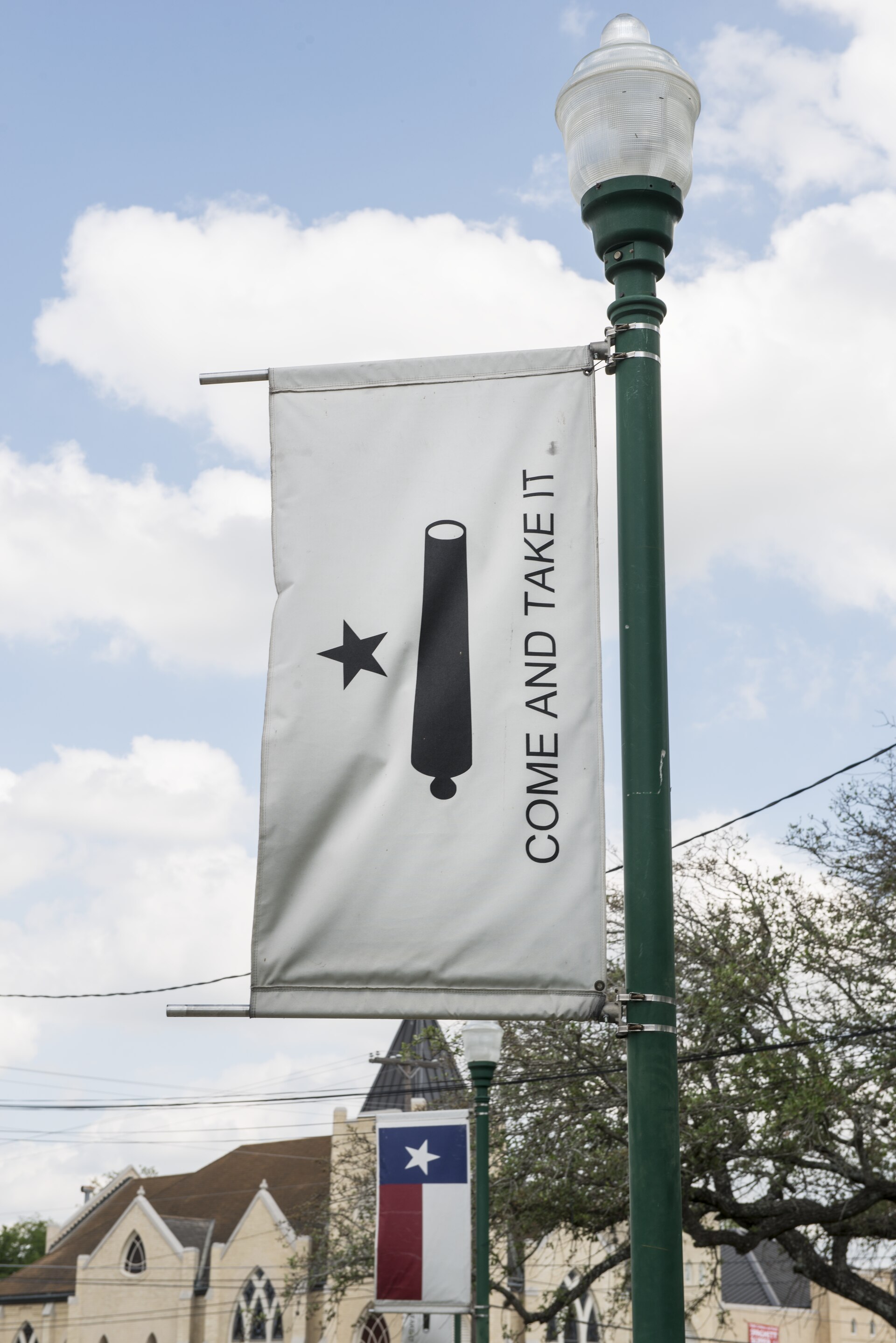
When the talks went nowhere, the Texians raised their flag: a white banner with a black cannon and the words “Come and Take It.” Then they fired the cannon, loaded with scrap iron and chain, at the dragoons.
Castañeda was outnumbered and under orders not to start a war, so he pulled his men back to Béxar. One or two of his soldiers were dead; sources differ.
“Since the orders from your Lordship were for me to withdraw without compromising the honor of Mexican arms, I did so.”
— Lt. Francisco de Castañeda, in his report to Col. Ugartechea (English translation)
“War is declared”
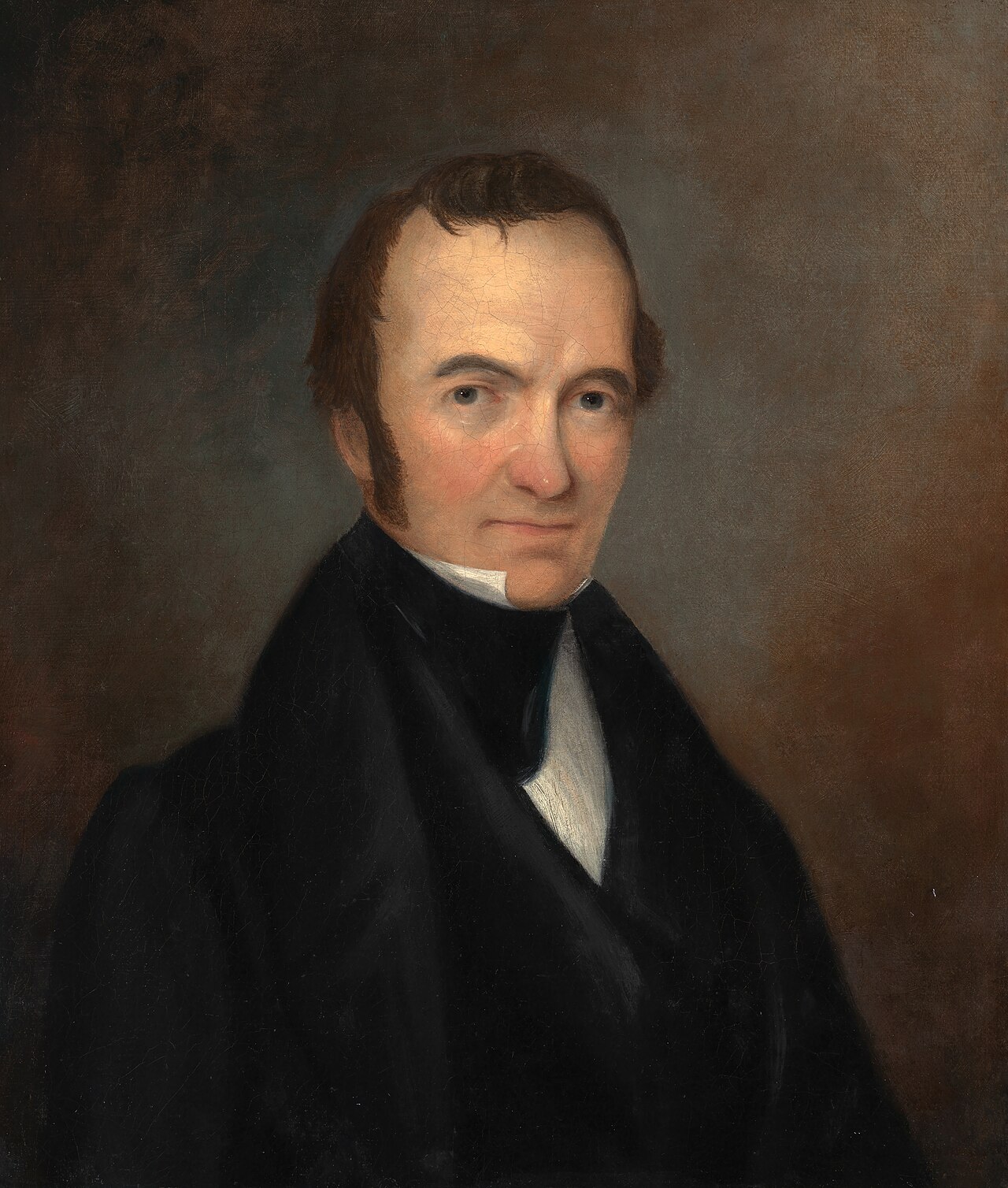
Militarily, Gonzales was barely a fight. The Texas State Historical Association’s Handbook of Texas calls it “really only a brief skirmish.” Politically, it was the point of no return. Volunteers poured into Gonzales, newspapers in the United States called it the “Lexington of Texas,” and Stephen F. Austin, who had spent years trying to work with Mexico, wrote two days later:
“War is declared—public opinion has proclaimed it against a Military despotism—The campaign has commenced.”
— Stephen F. Austin, in a letter to the San Felipe Committee of Public Safety two days after the battle
Austin was chosen commander on Oct. 11, and the volunteer army marched on Béxar. By the end of 1835, Mexican troops were gone from Texas. They came back in 1836, and when they surrounded the Alamo, the only reinforcements to make it inside were a company of men from Gonzales. Texas won its independence at San Jacinto on April 21, 1836.
Timeline
1831
Mexican officials lend Gonzales a small bronze cannon to defend against Comanche raids, to be returned on request.
Sept. 10, 1835
A Mexican soldier beats a Gonzales settler, raising tempers in town.
Late Sept.
Col. Ugartechea sends a corporal and five men for the cannon. Gonzales refuses.
Sept. 27
Lt. Castañeda leaves Béxar with about 100 dragoons, ordered to avoid a fight if he can.
Sept. 29
Eighteen militiamen (the “Old Eighteen”) hold the flooded Guadalupe crossing and stall.
Oct. 1
Reinforced Texians vote to fight and cross the river at night, cannon in tow.
Oct. 2, 1835
Dawn skirmish. A parley fails, the flag goes up, the cannon fires and Castañeda withdraws.
Oct. 11
Stephen F. Austin is chosen commander of the volunteer army, which marches on Béxar.
Dec. 1835
The Texians take Béxar; Mexican troops leave Texas by year’s end.
March 6, 1836
The Alamo falls. Gonzales men were the only reinforcements to get in.
April 21, 1836
Texian victory at San Jacinto secures independence.
So where is the cannon now?
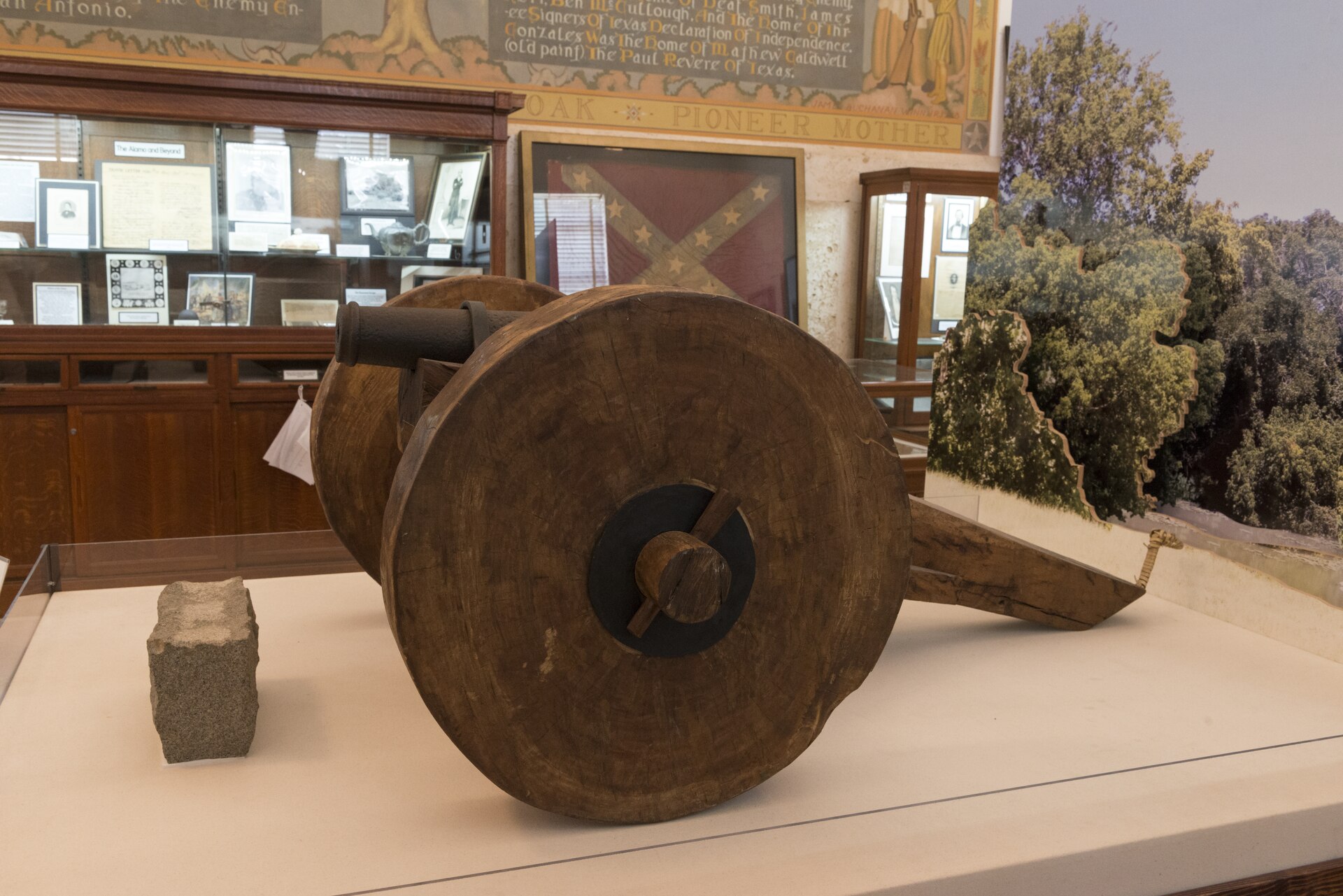
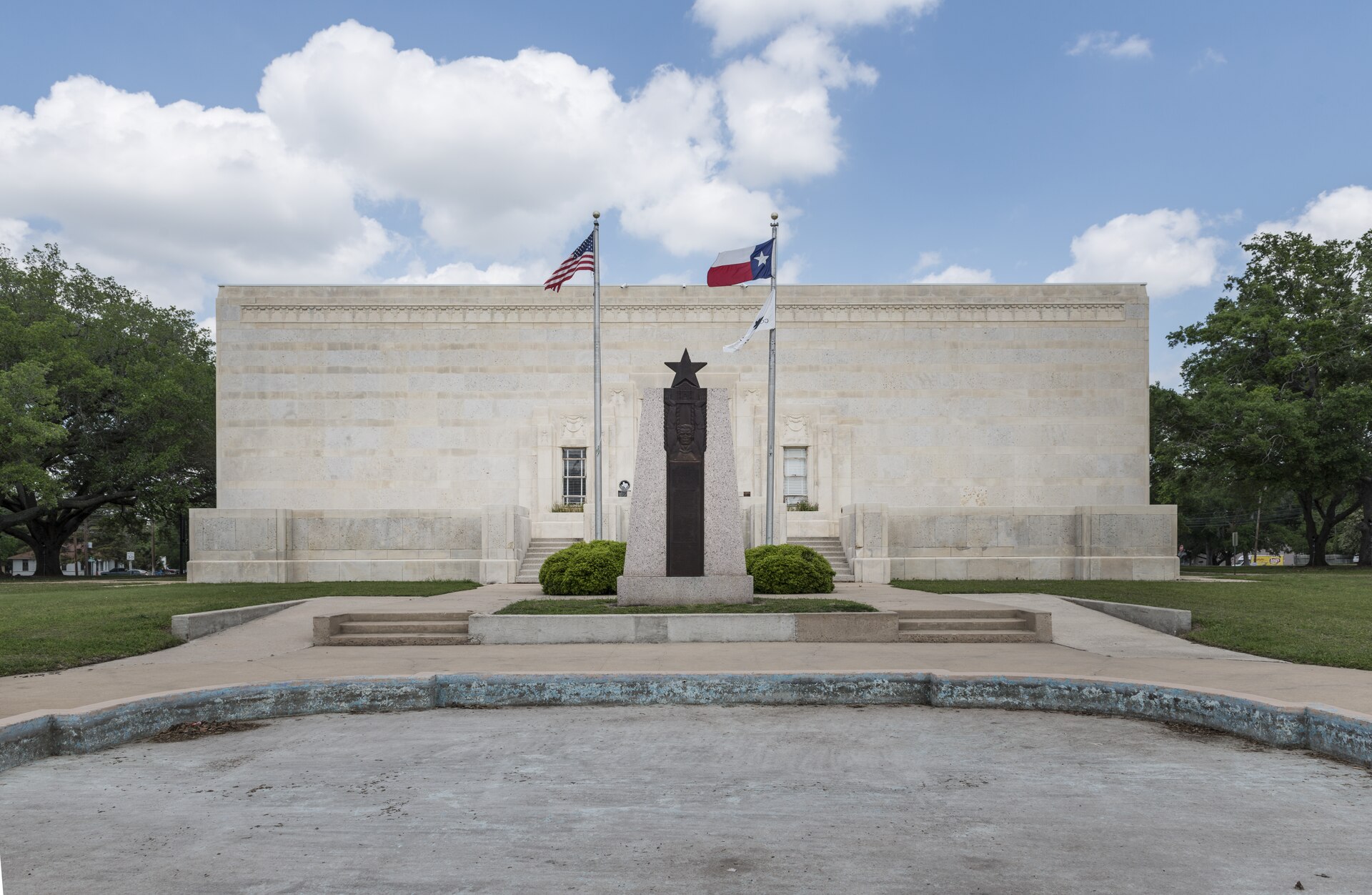
No one knows for sure. The Gonzales Memorial Museum displays a small iron cannon that turned up after a flood in 1936 as the “Come and Take It” cannon. Historian Thomas Ricks Lindley argued that the real gun was a bronze piece that ended up at the Alamo, was captured, dug up in 1852 and later melted down. The homemade flag disappeared too. Even its design is told differently: History.com describes a lone black star above the cannon, while other accounts mention only the cannon and the words.
Why it still matters
Four words painted on a homemade flag have outlasted the flag itself. “Come and Take It” is still on flags, bumper stickers and T-shirts across Texas. Today people of every political stripe use it to push back when they think government is overreaching. Gonzales still celebrates the battle every October.
The anniversary still gets people fired up. On Thursday, Oct. 2, conservative commentator Kambree (@KamVTV) marked it with the post below. She also tied it to present-day Texas politics; that part is her opinion, and we’re showing it as her post.
Then vs. now
THEN
A small borrowed cannon, lent to settlers in 1831 for protection against raids.
NOW
A cannon displayed in Gonzales as the “Come and Take It” gun, though whether it is the original is still debated.
THEN
One homemade banner, painted for a single morning and lost within months.
NOW
Replica flags fly from Gonzales lampposts and all over Texas.
THEN
Settlers demanding Mexico’s federalist Constitution of 1824 back.
NOW
A four-word slogan Americans use when they feel government is overreaching.
💡 DID YOU KNOW?
The Texians didn’t invent the line. During the American Revolution, in 1778, Col. John McIntosh used the same dare when the British demanded that he surrender Fort Morris in Georgia. In Gonzales, it became the first rallying cry of the fight for Texas independence.
Sources
- Stephen L. Hardin, “Gonzales, Battle of,” Handbook of Texas Online, Texas State Historical Association
- History.com, “The First Shots of the Texas Revolution”
- Wikipedia, “Battle of Gonzales” (with its cited scholarship)
- Britannica, “Battle of Gonzales”
- Sons of DeWitt Colony Texas: eyewitness accounts, including Castañeda’s report (translated)
- Library of Congress, Carol M. Highsmith Archive (photos)
- Kambree (@KamVTV) on X, Oct. 2, 2026
Image credits: Illustration: AI-generated (Grok) for We The People Press — AI illustration (not a historical image); Photo: Carol M. Highsmith, 2014, Library of Congress (public domain) — cannon, Gonzales Memorial Museum; Photo: Carol M. Highsmith, 2014, Library of Congress (public domain) — flag replica in Gonzales; National Portrait Gallery, Smithsonian Institution, via Wikimedia Commons (public domain) — Stephen F. Austin portrait; Photo: It'sOnlyMakeBelieve / Wikimedia Commons (CC BY-SA 4.0) — battle memorial marker; Photo: Carol M. Highsmith, 2014, Library of Congress (public domain) — Gonzales Memorial Museum.
Numbers in early Texas history vary by source. Where they do (troop strength, casualties, the flag’s design, the cannon’s fate), we have given the range or said so.


